

Signs of a Healthy Menstrual Cycle
Your menstrual cycle is more than just a monthly inconvenience; it’s a critical biofeedback system that offers profound insights into your overall health. Just as blood pressure, heart rate, respiratory rate, and body temperature provide essential data, the patterns and characteristics of your cycle are direct indicators of your underlying hormonal and metabolic status.
In 2015, the American College of Obstetricians and Gynecologists (ACOG) officially declared the menstrual cycle the “fifth vital sign,” urging clinicians to use it as a key diagnostic tool from a patient’s very first period. Yet, many women are still told that debilitating cramps, irregular cycles, and severe PMS are just “normal.” They are not. These are signals from your body that something is out of balance.
Understanding your menstrual cycle can give you valuable insight into what’s happening inside your body. Instead of brushing off symptoms or simply treating discomfort, this approach focuses on recognizing patterns and identifying what may be out of balance. Learning how your cycle reflects your overall health can help you feel more informed, more confident, and more connected to your body as you support long-term hormonal well-being.
The Menstrual Cycle: Why It’s Considered the Fifth Vital Sign
The concept of the menstrual cycle as a vital sign reframes it from a reproductive event to a systemic health indicator. A regular, ovulatory cycle is a direct reflection of a well-functioning endocrine system, which regulates everything from metabolism and mood to bone density and cardiovascular health. When the hypothalamic-pituitary-ovarian (HPO) axis—the communication pathway between your brain and ovaries—is operating smoothly, it results in normal cycles that are predictable.
Conversely, disruptions to this axis, caused by stressors like poor nutrition, inflammation, high cortisol, or insulin resistance, will manifest as cycle irregularities long before other chronic diseases become apparent.
Think of it as an early warning system. An irregular or absent monthly period isn’t just a fertility issue; it’s a signal that the body is under significant physiological stress and is conserving resources by shutting down non-essential functions like reproduction. Ignoring these signals is like ignoring a check engine light—it can lead to more significant problems down the road, including an increased risk for osteoporosis, heart disease, and certain cancers.
The Healthy Period Scorecard: 4 Quantifiable Signs of a Normal Cycle
A healthy period is not simply the absence of a diagnosed condition. It is defined by specific, measurable parameters that indicate optimal hormonal health. Normal periods follow predictable patterns and signal balanced menstrual cycles. Use this scorecard to evaluate your own cycle.
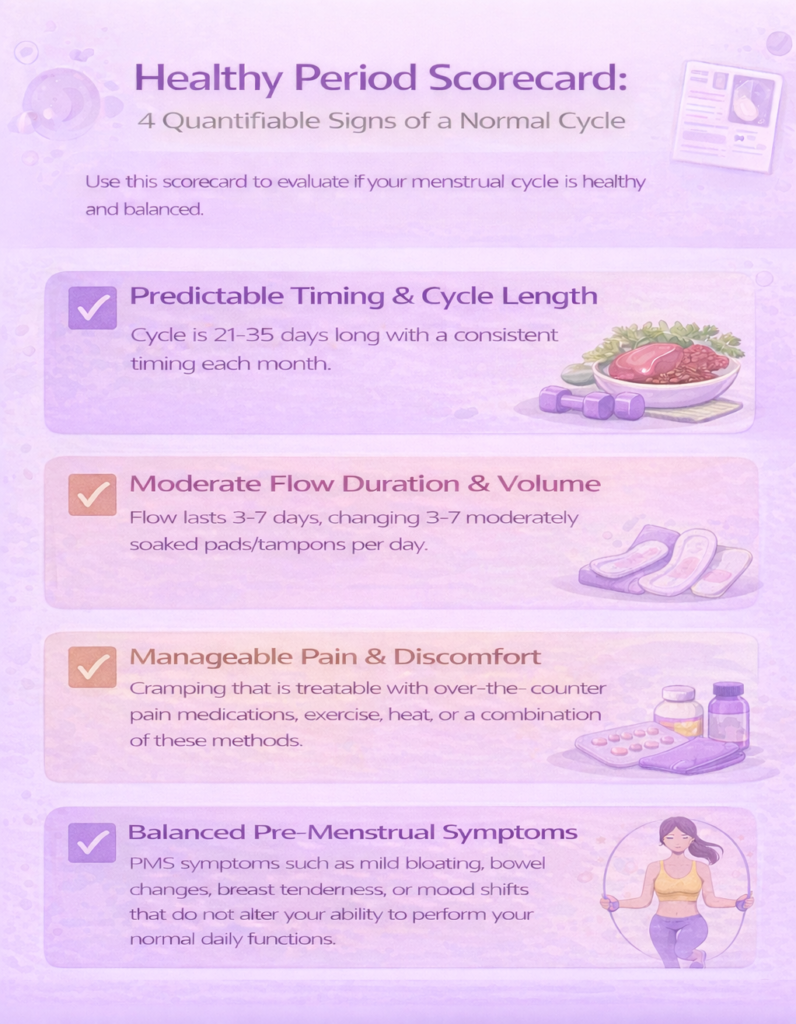
Sign 1: Predictable Timing and Cycle Length
A healthy cycle length for an adult is consistently between 21 and 35 days, with less than 8 days of variation from one cycle to the next. For example, a cycle that alternates between 28 and 30 days is regular, while one that jumps from 25 to 40 days is not. This predictability signals a stable HPO axis and consistent ovulation. Very short cycles (under 21 days) or excessively long ones require evaluation at a clinic.
Sign 2: Moderate Flow Duration and Volume
Your period should last between 3 and 7 days. Total blood loss should be around 30 to 60 milliliters (about 2 to 4 tablespoons) over the entire period. Clinically, losing more than 80 mL is considered heavy menstrual bleeding (menorrhagia). A practical way to gauge blood flow is by tracking your use of menstrual products. Soaking through a super tampon or pad every hour for several consecutive hours is a red flag.
On the other end of the spectrum, your period might be light with only a couple days of lighter bleeding. While this can be normal for some women, consistently very light periods or short periods lasting less than 2 days may indicate low estrogen levels or other hormonal imbalances that deserve attention.
Sign 3: Manageable Pain and Discomfort (Not Debilitating)
Mild, transient cramping on the first day or two of your period, easily managed with a hot water bottle or mild over-the-counter pain relief, can be normal. However, pain that is debilitating—causing you to miss school or work, vomit, or feel faint—is not. Severe pain (dysmenorrhea) is often driven by excess inflammatory prostaglandins and can be a sign of underlying conditions like endometriosis or fibroids.
Sign 4: Balanced Pre-Menstrual Symptoms (PMS)
It is common to experience mild symptoms in the week leading up to your period, such as gentle mood shifts, slight breast tenderness, or minor bloating. You might feel a bit more tired than usual. These symptoms should not interfere with your daily life. Severe PMS or Premenstrual Dysphoric Disorder (PMDD), characterized by intense depression, anxiety, irritability, and brain fog, indicates a significant imbalance between estrogen and progesterone, often exacerbated by stress and poor blood sugar regulation. Extreme fatigue that prevents you from functioning normally also warrants medical evaluation.
Systematic Diagnosis: Identifying Irregular Periods and Red Flag Symptoms
Understanding what constitutes an “irregular” cycle is the first step toward identifying the root cause and maintaining optimal period health.
Defining Irregularity: Oligomenorrhea and Amenorrhea
- Oligomenorrhea: This term describes infrequent periods, where menstrual cycles are consistently longer than 35 days.
- Amenorrhea: This refers to the complete absence of a period. Primary amenorrhea is when a girl hasn’t had her first period by age 15. Secondary amenorrhea is when a woman who previously had regular periods misses three or more in a row.
Root Cause Diagnostic Guide: Why Your Cycle is Irregular
Irregularity is a symptom, not a diagnosis. The underlying cause is often related to one of these common drivers:
- Stress (HPA Axis Dysfunction): High levels of cortisol can suppress GnRH, the master hormone that initiates your cycle.
- Insulin Resistance & PCOS: PCOS is the most common cause of irregular cycles and is often driven by insulin resistance, leading to high androgen levels that interfere with ovulation.
- Under-eating and/or Over-exercising (RED-S): Energy expenditure exceeding energy intake can lead to hypothalamic amenorrhea.
- Thyroid Dysfunction: Both hypothyroidism and hyperthyroidism can disrupt the HPO axis and cause a wide range of menstrual irregularities.
Critical Red Flags: When to Consult a Gynecologist Immediately
While many irregularities can be addressed with lifestyle changes, certain symptoms warrant immediate medical attention at a clinic:
- Bleeding between periods (intermenstrual bleeding)
- Bleeding after menopause
- Soaking through one or more pads or tampons per hour for several hours
- Passing blood clots larger than a quarter
- Sudden, severe pelvic pain
- A period that lasts longer than 7 days
- Unusual vaginal discharge that is cloudy, foul-smelling, or accompanied by itching or burning
Mapping the System: Recognizing Signs of Hormonal Imbalance
Your cycle is the main event, but other bodily systems provide corroborating data about your hormonal status.
Skin and Hair Indicators (Acne, Hirsutism, Hair Loss)
Androgen excess (high testosterone or DHEA-S) is a common driver of hormonal imbalance, particularly in PCOS. It can manifest as:
- Cystic acne: especially along the jawline, chin, and back
- Hirsutism: coarse, dark hair growth on the face, chest, or abdomen
- Androgenic alopecia: thinning hair on the scalp, particularly at the crown or temples
Metabolic and Weight Indicators
Your metabolic health is closely linked to your hormonal health. Signs of insulin resistance can include:
- Difficulty losing weight, especially around the midsection
- Intense cravings for sugar and carbohydrates
- Energy crashes, particularly after meals
- Skin tags or acanthosis nigricans (dark, velvety patches of skin)
Mood and Sleep Indicators
Hormonal fluctuations can affect neurotransmitters and sleep. Low progesterone can contribute to anxiety and poor sleep. Estrogen dominance can contribute to irritability and mood swings, while low estrogen can be linked to depression and brain fog.
Persistent fatigue, even with adequate sleep, may signal thyroid dysfunction or anemia related to heavy menstrual bleeding.
Proactive Health: Tracking Your Cycle as a Diagnostic Tool
Tracking your cycle is a powerful step toward understanding your body. It provides objective data you and your healthcare provider can use to support informed decisions about your period health.
Leveraging Biological Indicators (BBT and Cervical Mucus)
Beyond tracking the start date of your period, monitoring two fertility signs can help confirm ovulation:
- Basal Body Temperature (BBT): Taken first thing in the morning. After ovulation, progesterone causes a sustained temperature increase of about 0.5°F (0.3°C) until your next period.
- Cervical mucus: Fertile, egg-white-like mucus often appears before ovulation. After ovulation, discharge typically becomes thicker and cloudier or may dry up.
The Essential Data Points to Record for Health
In a journal or app, track:
- Cycle Day 1: the first day of full, red flow
- Cycle length: days from one Day 1 to the next
- Period details: flow volume, color, presence of clots
- Pain: type, location, severity
- Daily symptoms: mood, energy, sleep, skin, digestive symptoms
- Bio-indicators: BBT and cervical mucus patterns, including changes in discharge
Phases of the Menstrual Cycle: Syncing for Total Hormonal Balance
Cycle syncing is the practice of aligning diet, exercise, and lifestyle with the distinct hormonal phases of your menstrual cycle. This approach supports your body’s natural rhythms and can promote balance across menstrual cycles.
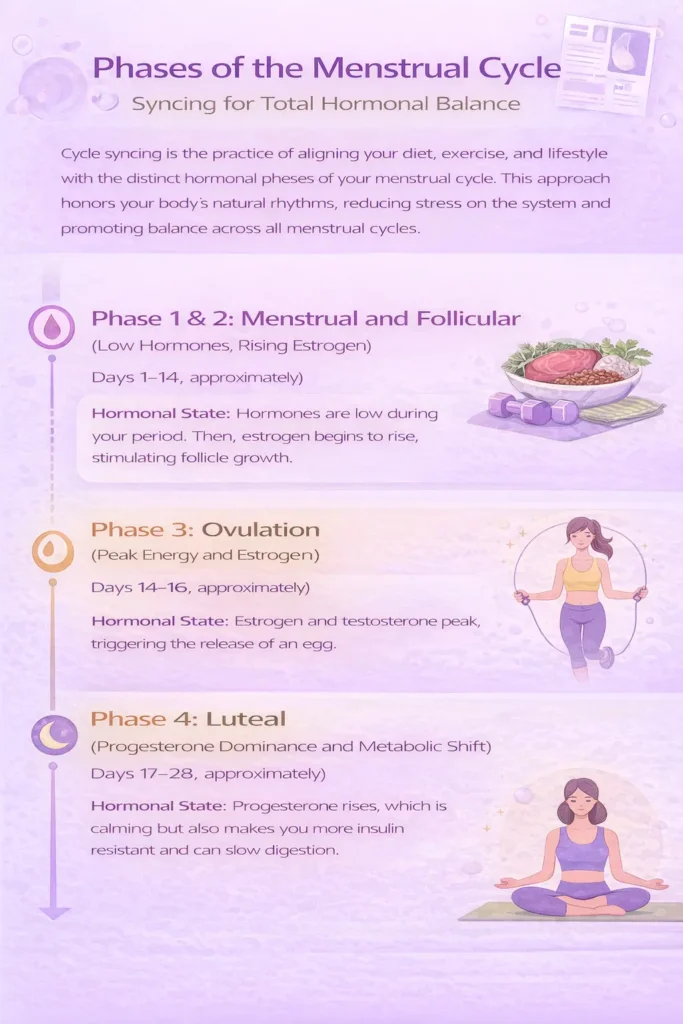
Phase 1 & 2: Menstrual and Follicular (Low Hormones, Rising Estrogen)
(Days 1-14, approximately)
- Hormonal state: Hormones are low during your period, then estrogen rises to stimulate follicle growth.
- Nutrition: Focus on nutrient-dense, iron-rich foods (red meat, lentils, dark leafy greens). As estrogen rises, include foods that support estrogen metabolism, such as flax seeds and broccoli sprouts.
- Exercise: Rest during menstruation if you feel tired. In the follicular phase, this is often a good time for HIIT and strength training.
Phase 3: Ovulation (Peak Energy and Estrogen)
(Days 14-16, approximately)
- Hormonal state: Estrogen and testosterone peak, triggering ovulation.
- Nutrition: Focus on antioxidant-rich foods and fiber (colorful vegetables, berries, whole grains).
- Exercise: This phase often supports higher intensity workouts and challenging activities.
Phase 4: Luteal (Progesterone Dominance and Metabolic Shift)
(Days 17-28, approximately)
- Hormonal state: Progesterone rises, which can be calming but may increase insulin resistance and slow digestion.
- Nutrition: Focus on complex carbohydrates (sweet potatoes, squash) and magnesium-rich foods (dark chocolate, nuts, seeds) to support mood, cramps, and sleep.
- Exercise: Shift to moderate-intensity movement such as yoga, Pilates, and light strength training.
Foundational Pillars for Long-Term Hormonal Balance
Beyond cycle syncing, these fundamentals support healthy menstrual cycles:
- Blood sugar balance: Eat protein, healthy fat, and fiber at each meal to reduce insulin spikes.
- Stress management: Support cortisol balance with practices like meditation, mindfulness, or time in nature.
- Prioritize sleep: Aim for 7 to 9 hours of quality sleep per night.
- Gut health: Support hormone metabolism with a diverse, fiber-rich diet.
References
- American College of Obstetricians and Gynecologists. (2015). Committee Opinion No. 651: Menstruation in Girls and Adolescents: Using the Menstrual Cycle as a Vital Sign. Obstetrics & Gynecology, 126(6), e143-e146.
- Prior, J. C. (2014). The menstrual cycle: a key indicator of women’s health. Journal of Women’s Health, 23(8), 616-619.
- Briden, L. (2017). Period Repair Manual: Natural Treatment for Better Hormones and Better Periods. Greenpeak Publishing.
- Vitti, A. (2020). In the FLO: Unlock Your Hormonal Advantage and Revolutionize Your Life. HarperOne.
Regular gynecologic care supports long-term wellness. Book a visit with CWC Alabama to stay proactive about your health.