

Understanding Hormonal Changes During Menopause
Understanding hormonal changes during menopause helps explain why the body feels different during this transition. As ovarian activity slows, estrogen and progesterone levels fluctuate rather than decline smoothly. Because of this, symptoms may appear unpredictably before periods fully stop. These shifts affect more than cycles, since hormones influence sleep, temperature regulation, mood, metabolism, and bone strength.
As changes progress, the body works to adapt. Signals from the brain increase in an effort to stimulate hormone production, which can intensify physical sensations. Therefore, experiences vary widely and may change month to month. Awareness of these patterns supports earlier recognition and proactive care.
Common effects linked to hormonal shifts include:
- Hot flashes and night sweats
- Sleep disruption and daytime fatigue
- Mood changes or difficulty concentrating
- Vaginal dryness or urinary discomfort
Although menopause marks the end of fertility, it also represents a new health phase. With proper guidance, symptom management and long term wellness become achievable.
How Hormone Levels Shift With Age
Hormone levels shift gradually as the body moves through the reproductive years and into later life. During this time, hormonal changes during menopause reflect a complex transition rather than a sudden stop. Early on, hormone levels fluctuate as ovarian function slows, and hormone levels frequently vary markedly from month to month. Because the hormones your ovaries make varies, many women notice irregular menstrual cycles during perimenopause, which marks the start of the menopausal transition.
As this process continues, the amount of estrogen produced begins decreasing until estrogen levels drop more consistently. At the same time, the hormone called inhibin declines, leading to rising FSH levels and increased luteinizing hormone signaling. These shifts affect reproductive hormones, sex hormones, and overall reproductive function, eventually resulting in ovarian failure and the end of fertility.
What Happens During Menopause
Menopause follows a general timeline, although each woman experiences it differently. Most women enter perimenopause in their mid to late forties, often between ages forty five and fifty. This phase can last four to eight years as the body adjusts to gradual change in ovarian activity. During this transition, cycles may become unpredictable and symptoms can appear sporadically, even though ovulation still happens at times and fertility remains possible.
Postmenopause begins after twelve consecutive months without a period, which typically occurs around age fifty one. From that point forward, ovarian function has ended and hormone levels settle into a lower, more stable range. While some menopausal symptoms fade within a few years, others may persist and shift in character.
What Hormone Levels Changed During Menopause?
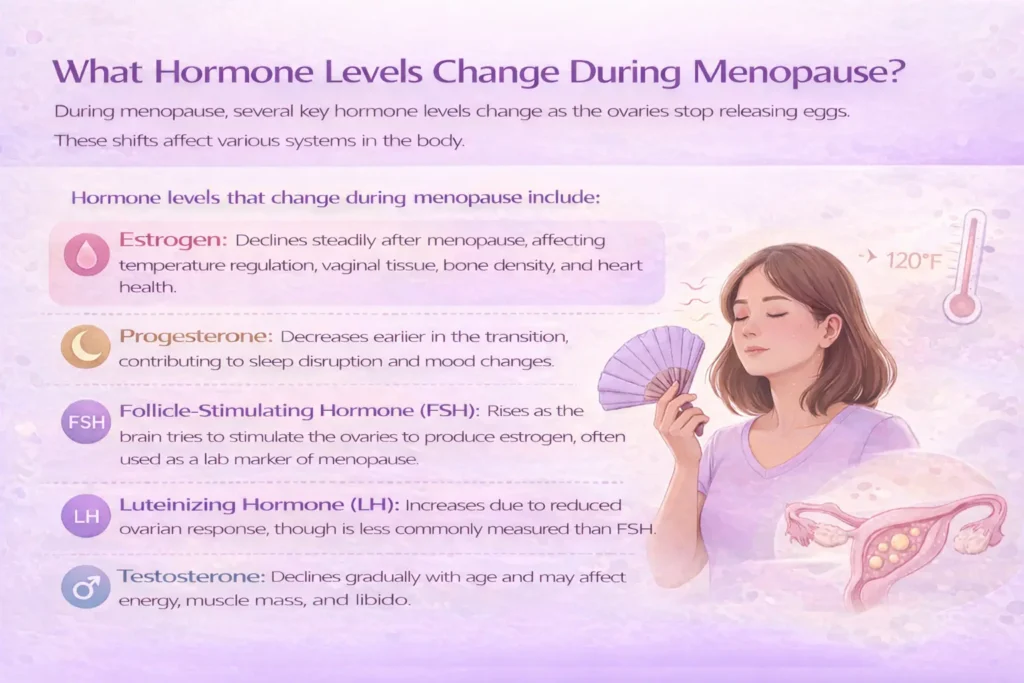
During menopause, several key hormone levels change as the ovaries gradually stop releasing eggs and hormone production slows. These shifts happen over time and affect many systems in the body.
Hormone levels that change during menopause include:
Estrogen: Levels fluctuate during perimenopause and then decline more steadily after menopause. Lower estrogen affects temperature regulation, vaginal tissue, bone density, and heart health.
Progesterone: This hormone decreases earlier in the transition because ovulation becomes less frequent. Reduced progesterone can contribute to sleep disruption and mood changes.
Follicle-stimulating hormone (FSH): FSH levels rise as the brain tries to stimulate the ovaries to produce estrogen. Elevated FSH is one of the most common lab markers of menopause.
Luteinizing hormone (LH): LH also increases due to reduced ovarian response, although it is less commonly measured than FSH.
Testosterone: Levels decline gradually with age, which may affect energy, muscle mass, and libido.
These hormonal changes explain common menopausal symptoms such as hot flashes, irregular periods, vaginal dryness, and sleep changes.
Why the Menopause Transition Causes Change
The menopausal transition creates widespread change because communication between the brain and ovaries shifts over time. As perimenopause begins, the hormones your ovaries make varies, leading to inconsistent feedback signals. Because of this, hormone levels frequently vary markedly, which affects multiple systems beyond the reproductive cycle.
Eventually, as ovarian function slows toward ovarian failure, the amount of estrogen and progesterone produced continues decreasing, and estrogen levels drop more permanently. This process alters reproductive hormones, impacts fertility, and reshapes how the body regulates temperature, sleep, and mood. Although menopause marks the end of cycles, it represents a broader biological transition rather than a single event for many women.

Common Symptoms Linked to Hormonal Fluctuations
As hormone levels shift, the body responds in recognizable ways. Many women experience symptoms that appear and fade unpredictably, especially during menopause. These responses reflect adjustments in sex hormones and nervous system regulation rather than illness.
Frequently reported symptoms include:
- Hot flashes and other vasomotor symptoms such as sudden warmth or sweating
- Sleep disruption and daytime fatigue
- Vaginal dryness or urinary discomfort
- Emotional changes linked to progesterone effects
Although these menopausal symptoms vary in intensity, personalized treatment and supportive therapy can reduce disruption and improve daily comfort.
The Role of Luteinizing Hormone in Menopause
Shifts in brain signaling hormones play a central role in menopause. As ovarian responsiveness declines, the pituitary increases output of luteinizing hormone and FSH levels to stimulate ovulation. However, as the ovaries respond less effectively, this feedback loop changes.
Lower production of the hormone called inhibin removes normal regulation, allowing FSH and luteinizing signals to rise further. These changes explain why cycles stop and why hormone replacement, estrogen therapy, or HRT may be considered as part of individualized therapy planning. Understanding this process helps clarify why symptoms occur and how care decisions support long term health.
Understanding Ovarian Failure and Its Impact
Ovarian failure represents the point when the ovaries no longer respond consistently to brain signaling, marking a key moment in the menopausal transition. As this transition progresses, the hormones it makes decline and estrogen levels drop, ending ovulation and fertility.
Because the hormones your ovaries make varies earlier on, many women first notice shifting patterns before cycles stop completely. Eventually, feedback from the brain increases, including higher FSH levels and luteinizing hormone, yet ovarian response remains limited.
This process affects reproductive hormones, sex hormones, and how the body manages temperature, sleep, and bone health. Although the term sounds abrupt, ovarian failure reflects a gradual biological shift tied to menopause rather than sudden loss of function. Understanding this stage helps explain why physical changes occur and why ongoing care remains important well beyond the end of cycles.
Treatment Options Including Estrogen Therapy
Treatment options focus on relieving symptoms while supporting long term health. Since hormone levels stabilize at lower ranges after cycles end, care plans often address comfort, sleep quality, and daily functioning. For some women, estrogen therapy helps reduce hot flashes and other vasomotor symptoms that interfere with rest or concentration.
Providers consider medical history, timing since menopause, and individual goals before recommending any therapy. Treatment does not follow a single formula, because experiences differ widely and needs change over time.
Options may address:
- Temperature regulation and sleep disruption
- Vaginal or urinary discomfort
- Bone and cardiovascular protection
Thoughtful treatment planning balances symptom relief with overall wellness.
Hormone Replacement as a Care Strategy
Hormone replacement remains one option for managing persistent menopausal symptoms when benefits outweigh concerns. This approach replaces declining hormones to support stability across multiple systems. In some cases, HRT may include estrogen alone or combined regimens to address progesterone effects.
Decisions rely on shared discussion, risk assessment, and regular follow up. When used appropriately, replacement strategies can improve quality of life and ease daily challenges associated with menopause, allowing each woman to move forward with confidence.
You don’t have to navigate women’s health questions alone. Connect with the experienced team at CWC Alabama today.