

How to Choose the Right Birth Control
Learning how to choose the right birth control often feels overwhelming, since deciding between options involves personal priorities. In fact, finding the right method can be tough when balancing lifestyle, comfort, and future plans. Still, clear information helps find an approach that feels manageable and effective. Each option offers unique benefits, while some include risks worth reviewing. Therefore, speaking with your health care provider allows you to discuss birth control, compare different types, and select birth control that’s right for daily life. Thoughtful guidance supports choosing one that works best, not just what others prefer.
Consider Your Lifestyle Needs Before Choosing
Daily habits strongly shape how you use birth control and how well it will work long term. For example, consider how long you intend to prevent pregnancy, along with schedule demands, travel, or comfort with routine care. Some methods require consistency, while others allow flexibility. Additionally, think about communication with your partner and protection against STDs.
Helpful factors to review include:
- Work hours and memory for daily tasks
- Comfort visiting a clinic for follow up
- Desire for added contraception reliability
Taking time to find a practical control method increases confidence and satisfaction.
Different Types of Birth Control Options
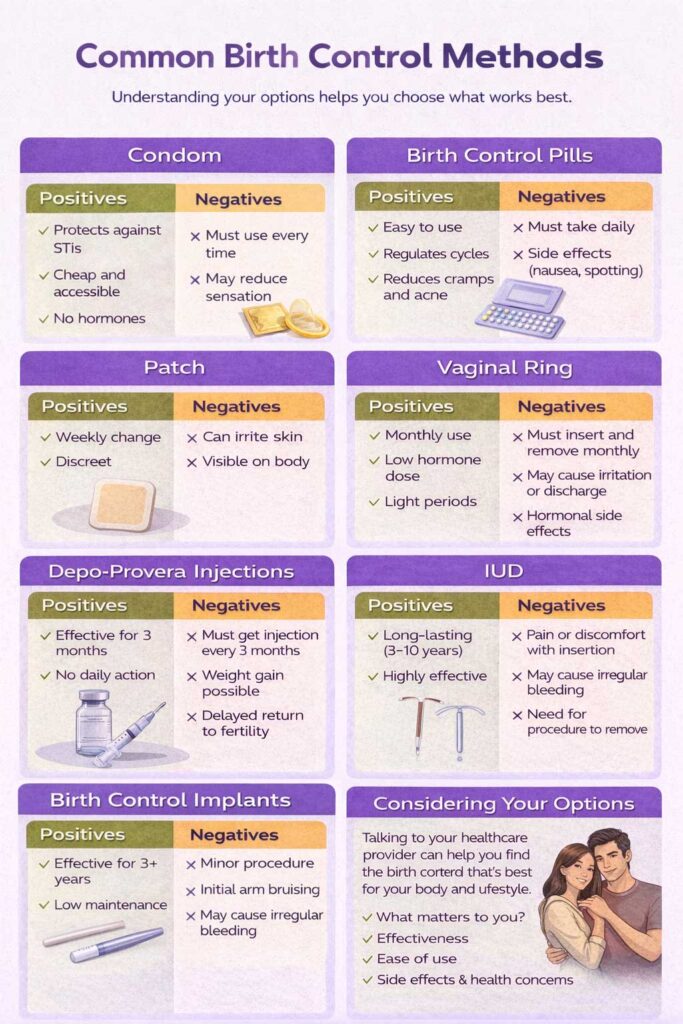
Exploring different types of birth control helps women understand how each option may fit daily routines and long term goals. Because choosing a method can be tough, gathering clear information makes deciding easier. Some approaches focus on hormones, while others avoid them entirely. Each option comes with unique benefits, levels of protection, and practical considerations. Therefore, learning how these methods compare supports finding birth control that’s right, rather than defaulting to what seems common.
Choice often depends on how long you intend to prevent pregnancy, comfort with medical visits, and lifestyle demands. Speaking with your health care provider allows you to discuss birth control options, understand how they work, and select one that works best for personal needs. Thoughtful guidance helps find a control method that feels manageable and effective over time.
Understanding Birth Control Pills
Birth control pills remain a common option within hormonal birth choices because they are familiar and widely available. These methods rely on hormones like progestin to prevent ovulation and regulate cycles. When taken correctly, pills are an effective form of contraception, though timing matters. Some women appreciate predictable routines, while others prefer alternatives due to possible side effects. Comparing pills to options like condoms, barrier methods, long-acting methods, or an IUD helps clarify preferences. Ongoing patient education from a trusted healthcare provider ensures safe use and informed decisions.
Barrier Methods and Non-Hormonal Choices
Barrier methods appeal to those who prefer hormone free options or want flexibility. These methods physically block sperm, reducing the chance of pregnancy while also helping protect against STIs. Condoms remain the most recognized option and are widely accessible. Some people combine condoms with spermicide for added protection. While these choices require use during every encounter, they avoid systemic hormone exposure and offer immediate control.
The benefits of barrier methods include:
- No long term commitment
- No hormones involved
- Protection depends on correct use
Although effectiveness varies, barrier options support contraception needs for those who value simplicity or shared responsibility with your partner.
Long-Acting Methods for Low-Maintenance Protection
For those seeking convenience, long-acting methods offer reliable, low effort protection. Options such as the IUD provide continuous coverage without daily attention. These methods rank among the most effective choices available and suit individuals who want steady contraception without routine reminders. Some devices use hormonal birth components like progestin, while others remain hormone free.
Advantages often include:
- Long lasting protection
- Minimal daily involvement
- Rapid return to fertility after removal
A visit to a trusted clinic allows placement and follow up, supporting patient education and safe care.
How to Decide Which Birth Control Is Best for You
Choosing an option often feels personal, since needs change over time and priorities differ. Health history, routines, and future goals all shape which option feels realistic. In many situations, birth control is best when it supports consistency rather than perfection. Gathering accurate information makes it easier to find an approach that fits daily life and long term plans. Speaking with your health care provider allows you to discuss birth control, review benefits, and understand potential risks. This process helps narrow choices and identify birth control that’s right, instead of choosing based on convenience alone.
How Birth Control Methods Work
Learning how options work simplifies comparison across different types of methods. Some choices prevent ovulation, others block sperm, while certain options change the uterine environment to reduce pregnancy risk. Hormonal choices, including birth control pills, rely on hormonal birth mechanisms such as progestin. Non hormonal approaches depend on physical barriers or placement. Understanding these basics helps find an effective form of contraception and clarifies when backup options like emergency contraception or emergency planning may apply.
Common mechanisms include:
- Hormone regulation
- Sperm blockage
- Uterine condition changes
Weigh Effectiveness, Convenience, and Cost
Balancing reliability with lifestyle fit often determines satisfaction with birth control. Some options remain highly effective with minimal effort, while others require daily attention or routine visits to a clinic. Convenience matters, especially for busy schedules or frequent travel. Cost and insurance coverage also influence long term use, particularly for ongoing contraception needs.
Understanding Potential Side Effects
Physical responses vary, so reviewing possible side effects ahead of time supports informed choices. Hormonal options may affect cycles or mood, while non hormonal choices avoid systemic changes. Awareness helps set expectations and reduces frustration if adjustments become necessary.
Rather than waiting, proactive steps include:
- Noticing early changes
- Communicating concerns quickly
- Switching methods when comfort declines
Ongoing guidance supports safe, confident contraception decisions over time.
Have questions about your reproductive health? Our providers at CWC Alabama are here to help you understand your options and feel confident in your care.