

Getting pap smear results explained can feel overwhelming at first. However, understanding what your results mean helps you take charge of your health. This guide breaks down everything you need to know about cervical cancer screening in simple terms.
Understanding Your Pap Smear Result
What a Pap Smear Result Measures in Cervical Health
Pap smears are routine screenings that check for changes in cells on your cervix. The cervix is the lower part of your uterus that connects to your vagina. During this screening test, your doctor collects a small sample of cervical cells using a soft brush or spatula.
A pap smear result shows whether cervical cells are normal or if changes have occurred. These changes might indicate an infection, inflammation, or precancerous conditions. The pap test serves as your first line of defense against cervical cancer. Early detection through regular screening saves lives because treatment works best when problems are caught early.
Why Results Matter for Early Detection and Prevention
Understanding your results helps you make informed decisions about your healthcare. Most women will have at least one abnormal result during their lifetime, but this does not mean you have cancer. Cervical cancer develops slowly, usually over many years. Regular pap smears catch changes during early stages when treatment is most effective.
In Alabama, where access to healthcare can vary by location, staying on top of your screening schedule is especially important for prevention.
How Results Are Reported by Labs and Providers
After your appointment, the pathologist examines your cervical cell sample under a microscope. Lab technicians look for unusual characteristics or patterns and then send a detailed report to your doctor.
Your provider will contact you about your test results, typically within one to three weeks. Results come in several categories, from normal to various types of abnormal findings. Your doctor will explain your specific result and discuss any recommended next steps.
Normal Pap vs Other Findings
What a Normal Pap Means for Long-Term Cervical Health
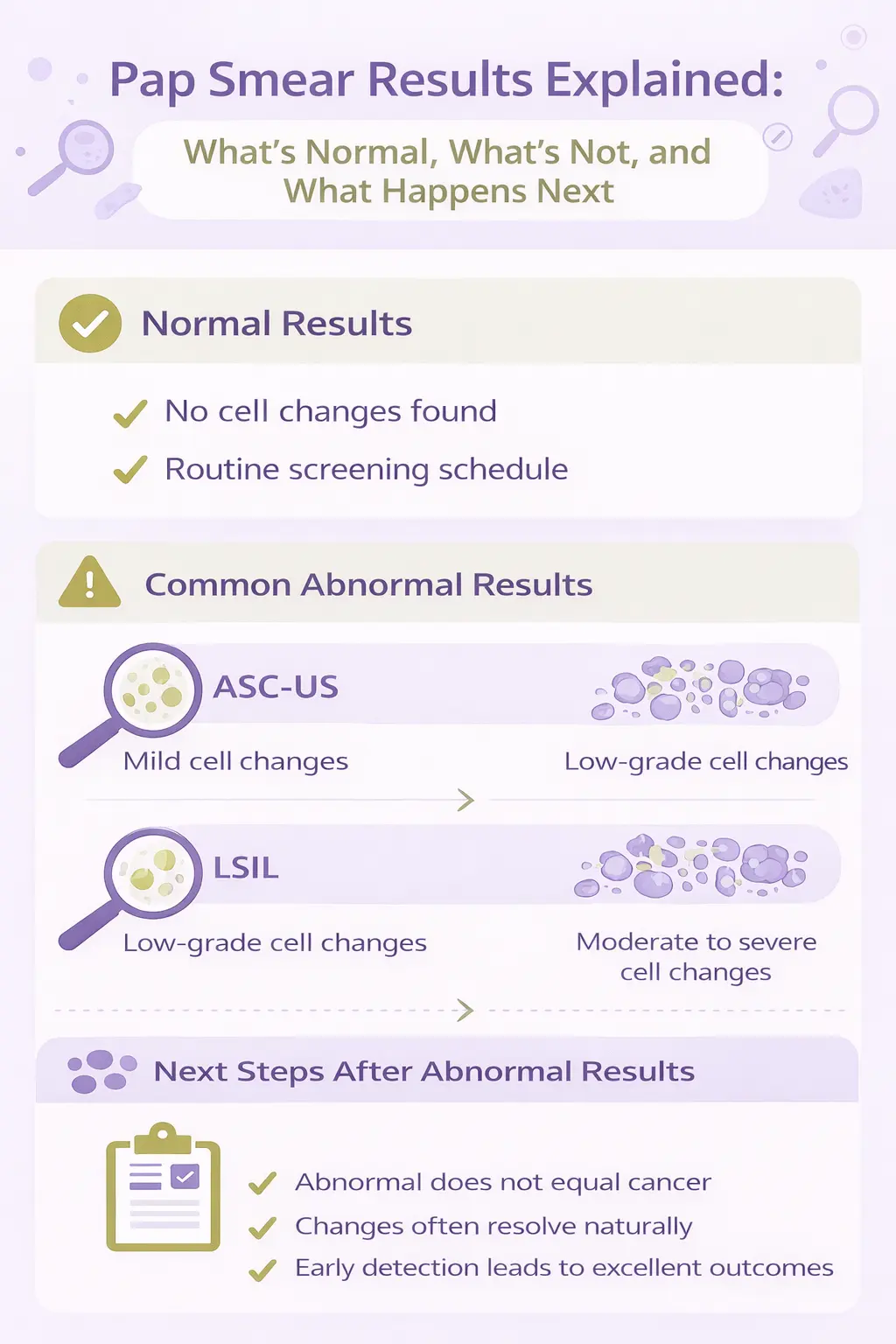
A normal pap result means no cell changes were found during your screening. This indicates that cervical cells are healthy. Normal results suggest your risk for developing cervical cancer remains low, but routine screening is still necessary because cells can change over time.
When Follow-Up Is Not Required
With a normal pap result, you typically do not need immediate follow-up testing. For most women between ages 21 and 65, this means returning:
- Every three years for pap tests alone
- Every five years for both pap test and HPV test together
These recommendations come from organizations such as ACOG and ASCCP. However, your insurance provider may follow slightly different guidelines. Many insurers in Alabama prefer a pap test alone every two years and a pap test with HPV testing every four years.
Your age and health history influence how often you need screening. Women with certain risk factors may need more frequent testing.
How Routine Pap Smears Fit Into Preventive Care
Pap smears are a key part of preventive gynecologic care. Routine screening has dramatically reduced cervical cancer rates over the past several decades. Many insurance plans, including Medicaid programs available in Alabama, cover pap smears as preventive services.
What It Means If Abnormal Cells Are Found
Definition of Abnormal Cells
Abnormal cells appear different from healthy cervical cells under a microscope. Finding abnormal cells does not automatically mean cancer is present. Cell changes occur along a spectrum from very minor to more serious. Many abnormal findings represent temporary changes that resolve naturally.
Common Causes of Abnormal Findings
Several factors can cause cervical cells to appear abnormal:
- HPV infection, the most common cause of cell changes
- Inflammation from infections such as yeast or bacterial vaginosis
- Hormonal changes during pregnancy or menopause
- Recent sexual activity, vaginal medications, or douching before your exam
- Normal healing after childbirth
HPV, or human papillomavirus, is extremely common. Most sexually active people will contract HPV at some point in their lives, and in many cases it resolves without treatment.
Why Abnormal Does Not Always Mean Cancer
An abnormal result simply indicates that cell changes were detected. Many abnormal findings are minor and require only monitoring. Your immune system often clears HPV-related cell changes within one to two years.
Even when cell changes persist, detecting them early allows doctors to treat them before cancer develops. The progression from early cell changes to cancer typically takes many years, and precancerous changes are highly treatable when identified early.
Types of Abnormal Cervical Cells
How Abnormal Cervical Cells Are Classified
Doctors use specific terms to classify cervical cell changes. The most common abnormal pap test result is ASC-US, which stands for atypical squamous cells of undetermined significance. ASC-US often resolves without treatment and may represent inflammation rather than precancerous changes.
Other classifications include:
- ASC-H: atypical squamous cells, cannot exclude high-grade lesion
- LSIL: low-grade squamous intraepithelial lesion
- HSIL: high-grade squamous intraepithelial lesion
- AGUS: atypical glandular cells of undetermined significance
Differences Between Mild, Moderate, and Severe Changes
Mild changes such as LSIL affect only the surface layers of cervical tissue and often resolve naturally. In these cases, providers typically recommend repeat testing or HPV testing.
Moderate to severe changes such as HSIL affect deeper layers of tissue and require closer monitoring or treatment. Even these findings represent precancerous changes rather than cancer itself.
How Providers Assess Risk
Your provider evaluates several factors when reviewing your pap smear result:
- Your age
- HPV test results
- Previous pap smear history
- Overall medical history
Your provider at Complete Women’s Care of Alabama will follow national guidelines while tailoring recommendations to your individual situation.
How Cervical Cells Are Evaluated During a Pap Test
How Cervical Cells Are Collected
The pap smear test takes only a few minutes during a routine exam. Your doctor inserts a speculum to view the cervix clearly and uses a small brush or spatula to gently collect cervical cells. The sample is placed in a liquid solution and sent to a laboratory for evaluation.
What Happens to Samples in the Lab
Lab professionals prepare microscope slides and examine the cells carefully. Specialists evaluate their size, shape, and structure to identify unusual patterns. Many laboratories also use computer-assisted technology to help identify abnormal cells.
Accuracy and Limitations of the Pap Test
Pap smears are highly effective at detecting cervical cell changes, but they are not perfect. Occasionally a test may miss abnormal cells or identify abnormalities when none are present.
Because of these limitations, regular screening is more important than any single test. Combining pap smears with HPV testing improves detection rates, which is why co-testing is commonly recommended for women over age 30.
What Happens After an Abnormal Result
Typical Next Steps After an Abnormal Finding
If your pap test shows abnormal cells, your provider will contact you to explain the results and discuss the next steps. For minor changes such as ASC-US, recommendations may include:
- Repeating the pap test in one year
- Ordering an HPV test if one was not performed
- Monitoring the condition, especially in younger patients
- A colposcopy procedure if HPV testing is positive or abnormalities persist
A colposcopy allows your doctor to examine the cervix more closely using magnification and take small tissue samples if necessary.
When Additional Testing May Be Recommended
Additional testing may be recommended if abnormalities appear more significant. HPV testing identifies whether high-risk virus types are present. Colposcopy remains the standard follow-up procedure for moderate to severe changes.
How Timing and Age Affect Care Decisions
Age plays a major role in treatment decisions. Younger women often clear HPV naturally, so providers may recommend observation rather than immediate treatment. Women over 50 may receive more proactive management since cell changes in this group are less likely to resolve without intervention.
Common Follow-Up Testing After a Pap Smear Result
When Repeat Screening Is Needed
Repeat pap smears track how cervical cells change over time. For minor abnormalities, your doctor may ask you to return in six to twelve months. Staying on schedule for follow-up testing is essential.
Diagnostic Testing Options Explained
Colposcopy is the primary diagnostic test used to evaluate abnormal pap smear results more closely. During this exam, your doctor applies a dilute vinegar solution to highlight abnormal tissue and may take small biopsies for laboratory analysis.
Although biopsies can cause mild cramping, the procedure is generally well tolerated. Providers often offer pain management options to improve comfort.
What Providers Look for in Follow-Up Exams
During follow-up visits, your provider evaluates:
- Whether abnormal cells remain present or have improved
- The size and location of abnormal areas
- Overall health factors such as smoking status or immune conditions
How Long It Takes to Receive Pap Smear Results
Typical Turnaround Time
Most pap test results arrive within one to three weeks. Timing depends on how quickly the laboratory processes the sample and overall lab workload.
Some offices contact every patient with results, while others only call when results are abnormal. At CWC Alabama, normal results may be sent through secure messaging, email, or text notifications. If results are abnormal, the office will contact you directly to discuss next steps.
Factors That May Delay Results
- Inadequate samples requiring repeat testing
- High laboratory volume
- Additional specialist review by pathologists
- Administrative issues such as incorrect contact information
When to Contact Your Provider
Contact your provider if three weeks pass without receiving results. You should also reach out if you experience symptoms such as unusual bleeding, pelvic pain, or abnormal discharge while waiting.
When to Talk to Your Provider About Results
Symptoms to Report Right Away
- Bleeding between periods
- Bleeding after menopause
- Unusual vaginal discharge
- Severe pelvic pain or pain during intercourse
- Persistent bleeding after sex
Questions to Ask at Your Appointment
- What does my specific result mean?
- What follow-up steps are recommended?
- When should I schedule my next screening?
- What are the chances these changes will resolve on their own?
- Would lifestyle changes improve outcomes?
- Who should I contact if I have questions between visits?
How Results Guide Personalized Care Plans
Your pap smear results become part of your ongoing medical record. A history of normal results may allow longer screening intervals, while repeated abnormalities may require closer monitoring.
Pap Smears and Ongoing Women’s Health Care in Birmingham, AL
Importance of Routine Screening
Routine pap smears are one of the most effective tools for preventing cervical cancer. Early detection of abnormal cell changes allows treatment before cancer develops.
Approximately 0.6% of women in the United States will develop cervical cancer during their lifetime. Screening improvements have cut this rate in half since 1975. When cervical cancer is detected early, five-year survival rates increase significantly.
The Alabama Department of Public Health prioritizes cervical cancer screening and offers programs that help uninsured women access low-cost or free pap tests.
How CWC Alabama Supports Preventive Gynecologic Care
CWC Alabama provides cervical cancer screening and comprehensive follow-up care for abnormal results. Providers prioritize clear communication so every patient understands their results and recommended next steps.
Scheduling and Continuity of Care
Establishing care with a consistent provider allows them to track your health over time. When providers understand your medical history and previous screening results, they can identify changes more quickly.
Many practices offer reminder systems through calls, text messages, or emails to help patients stay on schedule for routine screening.
Regular pap smears require only a small time commitment but provide significant protection against cervical cancer. Whether your results are normal or require additional follow-up, your healthcare team at Complete Women’s Care of Alabama is here to support you every step of the way.